
Do we really know what works in health? The Cochrane Balearic Islands Group brings scientific evidence to the streets of Palma
From the EVISAP research group (Primary Care, Health Services and Evidence-Based Medicine) at IdISBa, we are pleased to announce a pioneering initiative in our community: the Cochrane Balearic Islands Group is launching an ambitious scientific outreach campaign in the streets and healthcare centres of Palma.
As a recently affiliated institution of Cochrane Iberoamérica, our aim is to strengthen the presence of evidence-based medicine in our region and promote a culture of informed decision-making in healthcare. This campaign represents a step in that direction, integrating science into citizens’ everyday lives.
What does the project involve?
The campaign seeks to bring scientific evidence closer to the general public through an urban communication strategy. The initiative replicates a successful model implemented in Barcelona in 2025, now adapted to the context of the Balearic Islands.
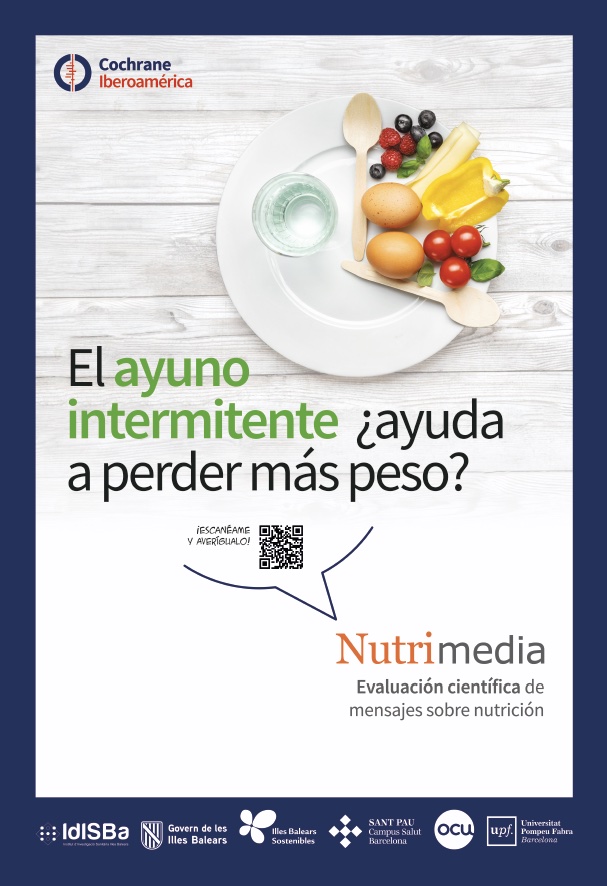
The central element of the campaign is a series of posters displayed in 32 bus shelters located in strategic, high-traffic areas across Palma. These posters pose health-related questions of broad public interest, designed to spark curiosity and encourage critical thinking. Some of the questions that citizens will encounter include:
- Can listening to music relieve insomnia?
- Does intermittent fasting help with weight loss?
- Do blue light filters improve vision?
- Can I rely on a single study?
- Are low-carbohydrate diets more effective for weight loss?
Each poster includes a QR code directing users to answers based on Cochrane systematic reviews, as well as to leading outreach projects such as Cochrane Responde and Nutrimedia.
Timeline and geographical scope
The main action in Palma’s bus shelters will take place during the first half of June, specifically from 1 to 15 June 2026.
However, the impact of the project extends far beyond public transport. To ensure that the message reaches both the general population and healthcare professionals and students, materials will also be distributed across:
- 46 primary care health centres in Mallorca
- The island’s 4 main hospitals
- The University of the Balearic Islands (UIB) and ADEMA University School, where posters will be placed in faculties to raise awareness among future professionals
Partners and funding
This project is the result of close collaboration between key institutions in the scientific, academic and professional fields. The campaign is driven by the local Cochrane Balearic Islands group, part of the Balearic Islands Health Research Institute (IdISBa), and was originally developed by Cochrane Iberoamérica.
It involves direct participation from members of the EVISAP research group, the University of the Balearic Islands (UIB), and SATSE-CIDEFIB Balearic Islands. In addition, organisations such as the Spanish Organisation of Consumers and Users (OCU) and Pompeu Fabra University contributed to the original design of the materials through the Nutrimedia project.
The feasibility of this initiative has been made possible thanks to the support of the Regional Ministry of Health and, fundamentally, to funding from the Regional Ministry of Education and Universities through resources from the Sustainable Tourism Tax (ITS), within the framework of grants for scientific outreach activities.
A multidisciplinary team at the service of evidence
Behind this campaign is a team of experts from IdISBa and EVISAP committed to transparency and information quality. The project is led by Dr Rocío Zamanillo Campos, a specialist in nutrition and digital health, and scientifically supervised by Dr Ignacio Ricci-Cabello, director of EVISAP and coordinator of the Cochrane Balearic Islands Group.
Researchers such as María Antonia Fiol de Roque, Narges Malih, Pau Riera Serra, and Adoración Castro Gracia are also actively involved, together with Antonio González Trujillo in the adaptation of materials and Gonzalo Casino from the Iberoamerican Cochrane Centre in journalistic supervision.
Why is this campaign necessary?
In an environment saturated with misinformation and fake health news, it is essential to provide tools that enable citizens to distinguish reliable messages from unfounded myths.
We hope that this initiative will not only increase awareness of scientific research but also foster critical thinking and trust in decisions based on rigorous evidence.
As Ignacio Ricci-Cabello, the group’s director, notes:
“We are surrounded by health information, but not all of it is based on solid scientific evidence. Cochrane has spent more than 30 years gathering the best available evidence, and projects such as Cochrane Responde and Nutrimedia translate it into accessible language for everyone. This campaign brings that message to the streets and highlights that Cochrane is also present in the Balearic Islands.”
With this initiative, we reaffirm our commitment to open, accessible and, above all, useful science to improve the health of all citizens in the Balearic Islands.
Look out for our posters at bus stops across Palma this June and discover what science says about your health!
This text is a literal translation of the original article written in Spanish, available on this website. The translation has been produced using artificial intelligence tools.
